Godox V1 Mid Review and is it worth it?

Godox V1 Mid Review — Is It Worth It?
Godox V1 Mid review based on use with the Nikon Z8, Z7II and Z6III by Kieran Hayes · West Cork, Ireland.
Godox just launched another round head speedlight — and no I am not talking about the V1 Pro that many photographers were are talking about. This is the V1 Mid. A smaller, lighter, more affordable addition to the V-series lineup that sits alongside the popular original V1.
After several weeks shooting with the V1 Mid on my Nikon Z8, Z7II and Z6III across indoor events, portraits and outdoor shoots in West Cork, here is my honest take on whether it deserves a place in your kit bag.
“Smaller body, lighter weight, $179 — and after testing it on three Nikon Z bodies, I think it might be the speedlight most Nikon Z photographers actually need.”
You can watch my full hands on Godox V1 Mid Review below or read on if you prefer.
Godox V1 Mid — Key Specifications
- Power output: 55 Ws
- Recycle time: 1.7 seconds at full power
- Full-power flashes: 650+
- Flash duration: 1/600s – 1/20,000s
- Zoom range: 24–105mm (auto and manual)
- Display: 2-inch OLED colour touchscreen
- Wireless: Godox 2.4GHz X system — master/slave
- HSS: Up to 1/8,000s
- Battery: VB22 · 7.2V · 2200mAh · USB-C charging
- Weight: 413g (with battery)
- Price: $179 / approx. €170
Price
The Godox V1 Mid currently retails at around $179.- and considering what you will read in the rest of this review and the question I asked at the start “Is it worth it?” I would have to say yes, it really is.
The V1 Mid is great value for money for what you get and I really enjoyed using it over the last four weeks. Now there are also a few things you should know about this unit like it’s output power and size but I will get into those in a lot more detail later on.
If you want to check the latest prices in your region you check the links below for up to date pricing and availability.
You can check the price on Amazon worldwide here or on Adorama here.
I have a 10% Godox discount code for the Essential Photo and Video website too, so please feel free to use that at checkout to save yourself some money.
Please note these are affiliate links so if you purchase through them I might get a slight commission but it doesn’t cost you anything in fact you can save money with the discount code, so thank you for supporting my website and Youtube channel.
What’s in the Box
The V1 Mid ships with everything you need to get started straight away. Inside the box you will find the flash itself, the VB22 lithium-ion battery, a USB-C charging cable and adapter, a mini stand and a storage bag.
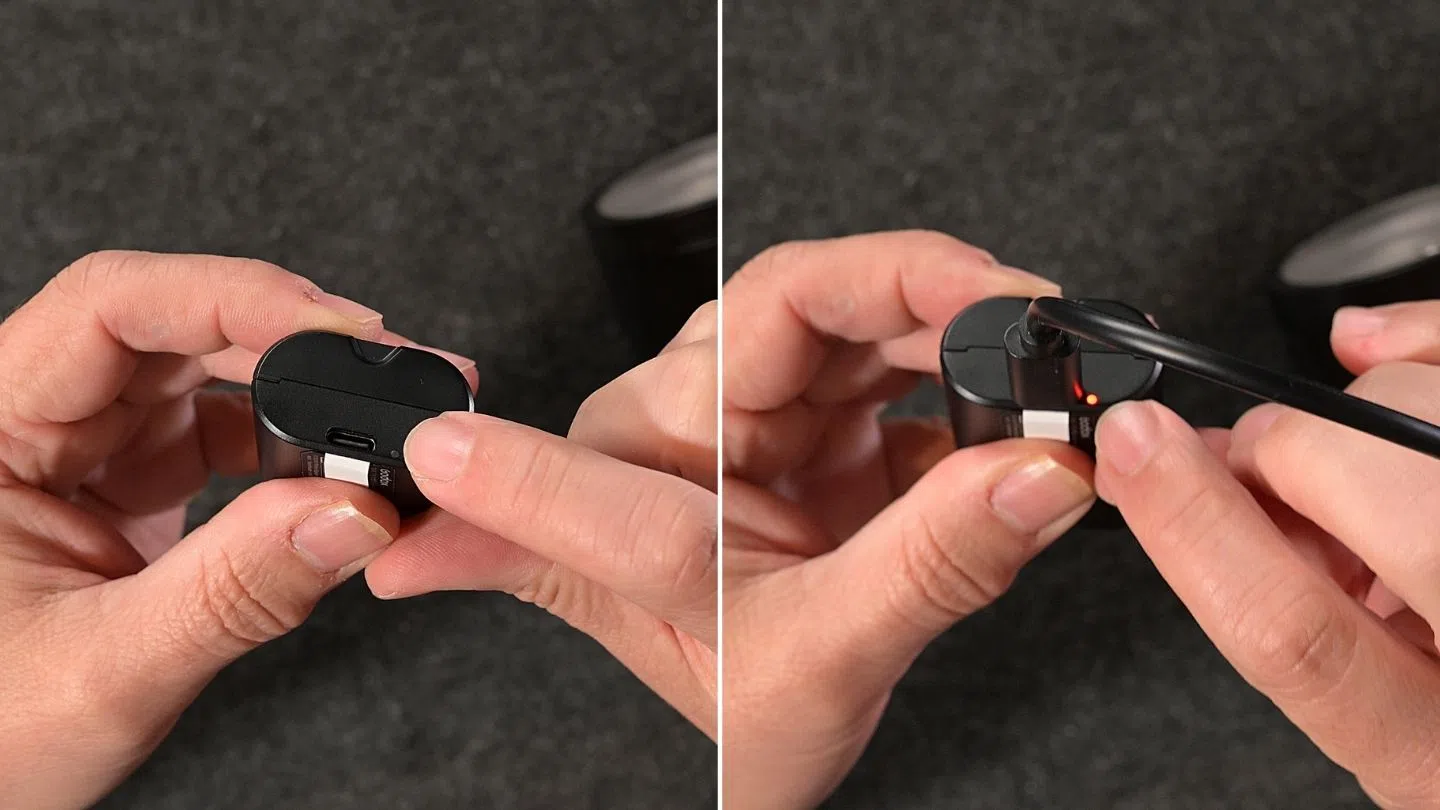
Battery Charging
Build Quality and Design
First impressions are very positive. The V1 Mid is noticeably more compact and lighter than the original V1. The round head is the same diameter — so it remains fully compatible with the Godox AK-R1 modifier kit — but the body behind it is trimmer, and you feel that straight away when you pick it up.
Build quality is solid for the price point. It does not quite reach the premium feel of the V1 Pro but at $179 it feels very well constructed. There are no rattles and the fit and finish is consistent throughout.
Hotshoe lock
The hotshoe lock is the lever-style mechanism which I much prefer to the older Godox twist locks. Attach it, click and you are done — a small thing that makes a real difference when you are moving quickly on a shoot.
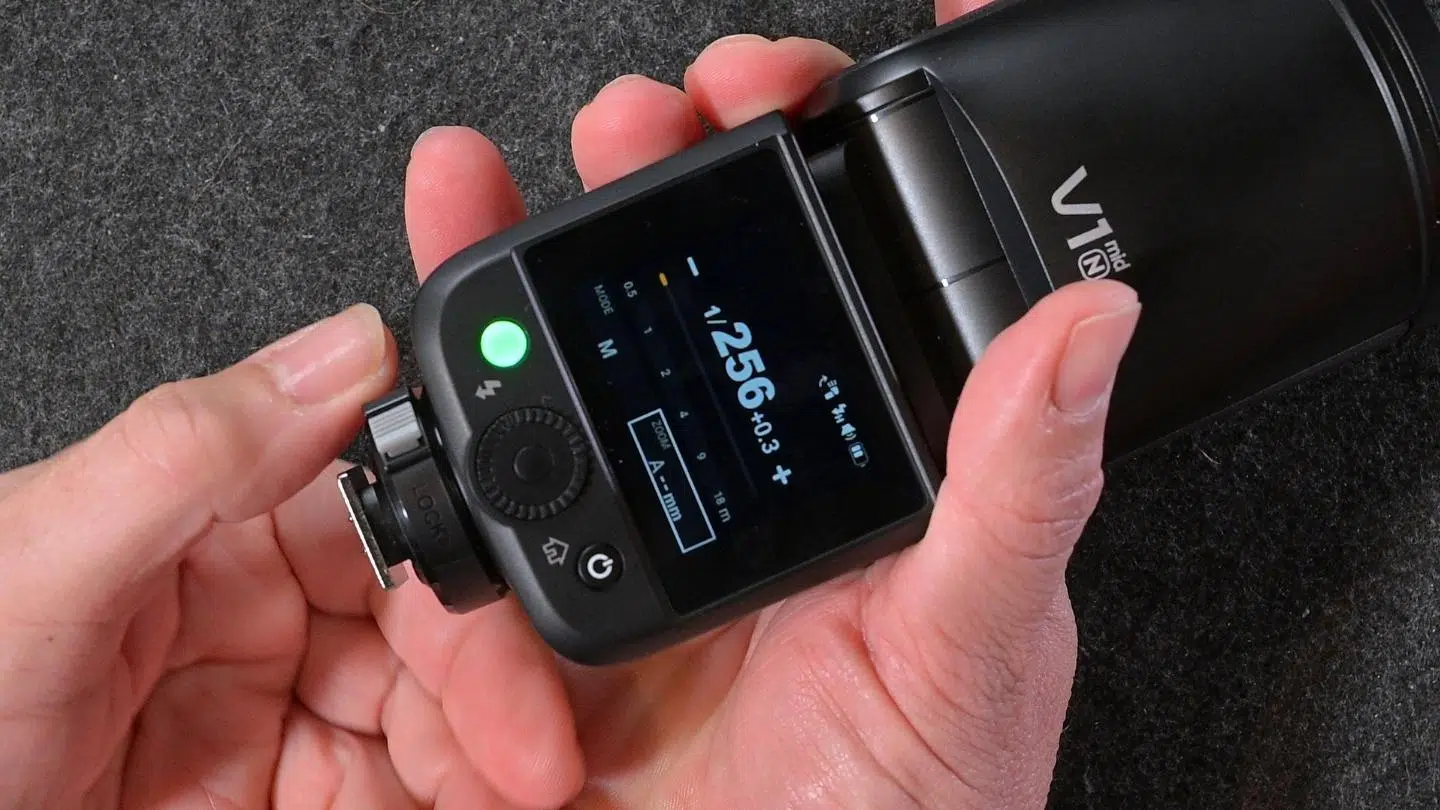
Touchscreen
The headline design feature is the 2-inch OLED colour touchscreen. You can slide directly on the screen to adjust power or swipe between menu options — it is genuinely quick and intuitive to use mid-shoot. Now, it does take a small bit to get used to it.
It’s sensitive and easy to control, just like swiping across your phone, you can pop in and out of settings in no time.
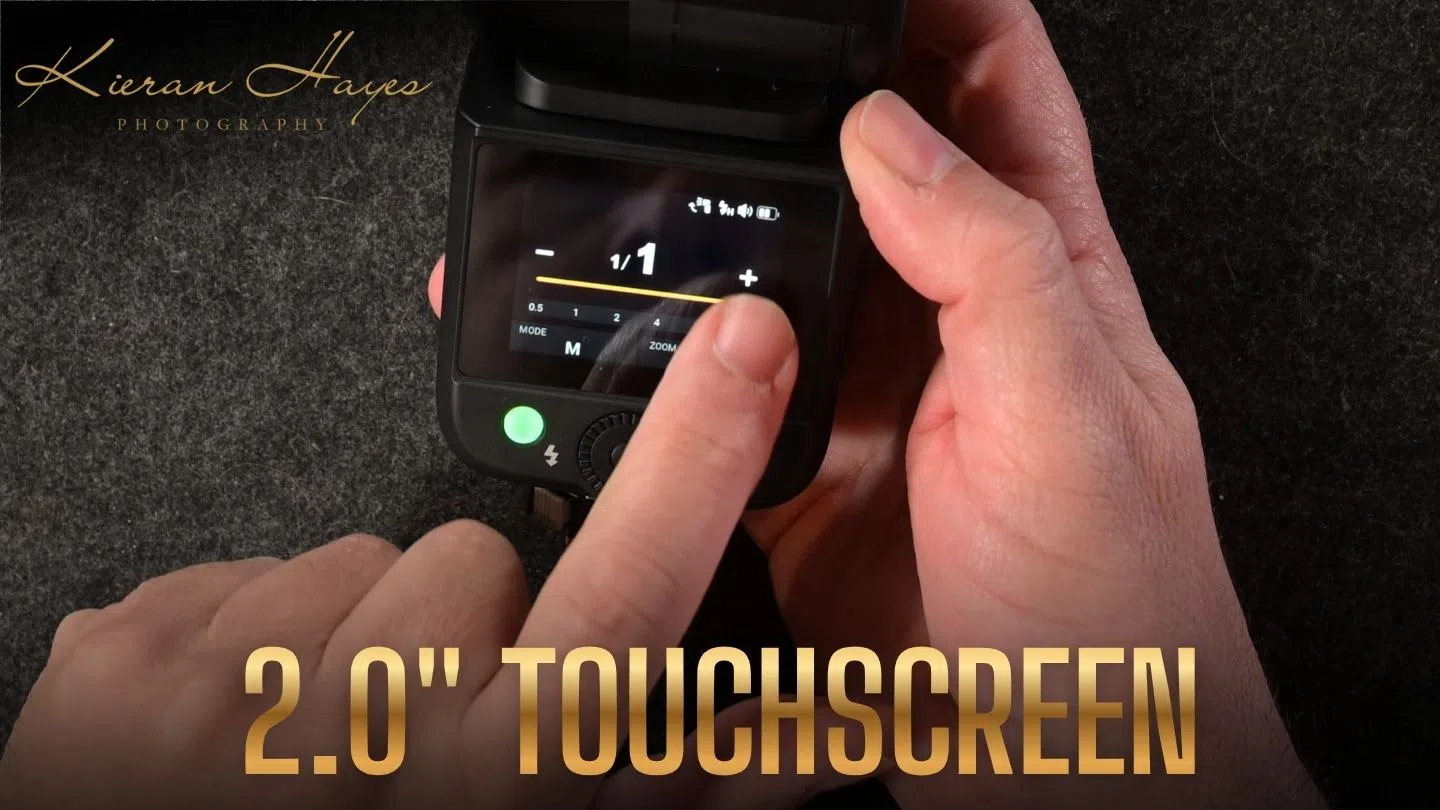
For anyone who prefers physical controls, the traditional buttons are still there also and for added security you can lock the touchscreen to prevent accidental adjusting the settings, which is a sensible addition for wedding and event photographers.
Flash Head Movement
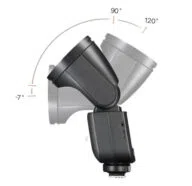
The flash head tilts from minus 7 degrees to line up nicely with your lens all the way back to 120 degrees so bouncing the flash off ceilings or using different modifiers is no problem. The head is also stiff enough so it won’t fall over easily if you are using larger modifiers.
Size and Weight Comparison
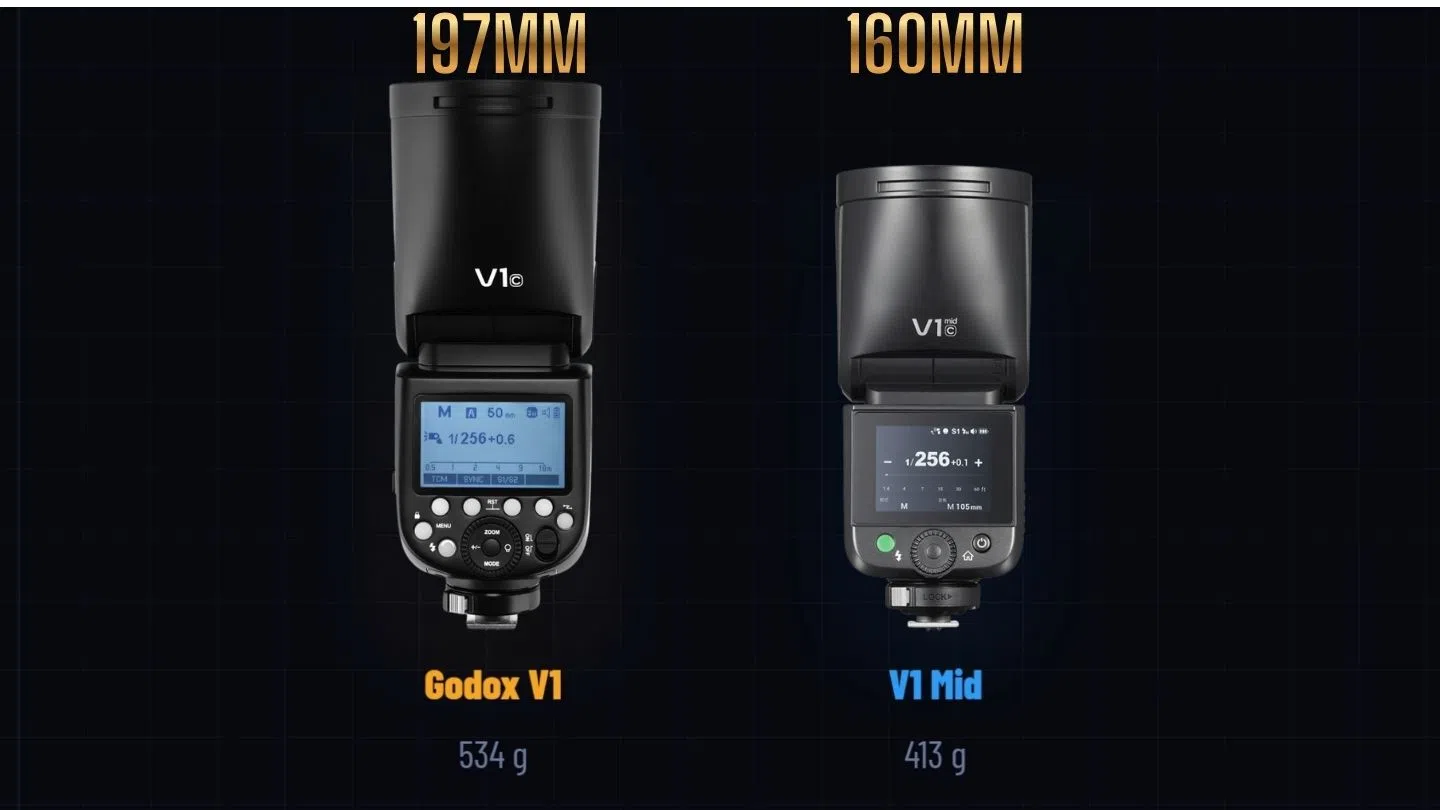
The V1 Mid weighs 413 grams with a battery fitted. The original V1 weighs 534 grams with a battery fitted. That’s a 121 gram difference. So the V1 Mid is approximately 23% lighter than the V1.
On paper that sounds modest but over a six or eight hour shoot that saving is genuinely noticeable. The lighter body also improves the balance on the camera, particularly on the Z6III which is already a very well-balanced body.
The V1 Mid is also a meaningfully shorter and slimmer unit than the original V1. If you regularly shoot with the flash mounted on camera for extended periods, the size reduction is a real practical benefit.
The other advantage here is if you use two or three units over the course of an event that weight and size savings are far more noticable then.
Flash Power
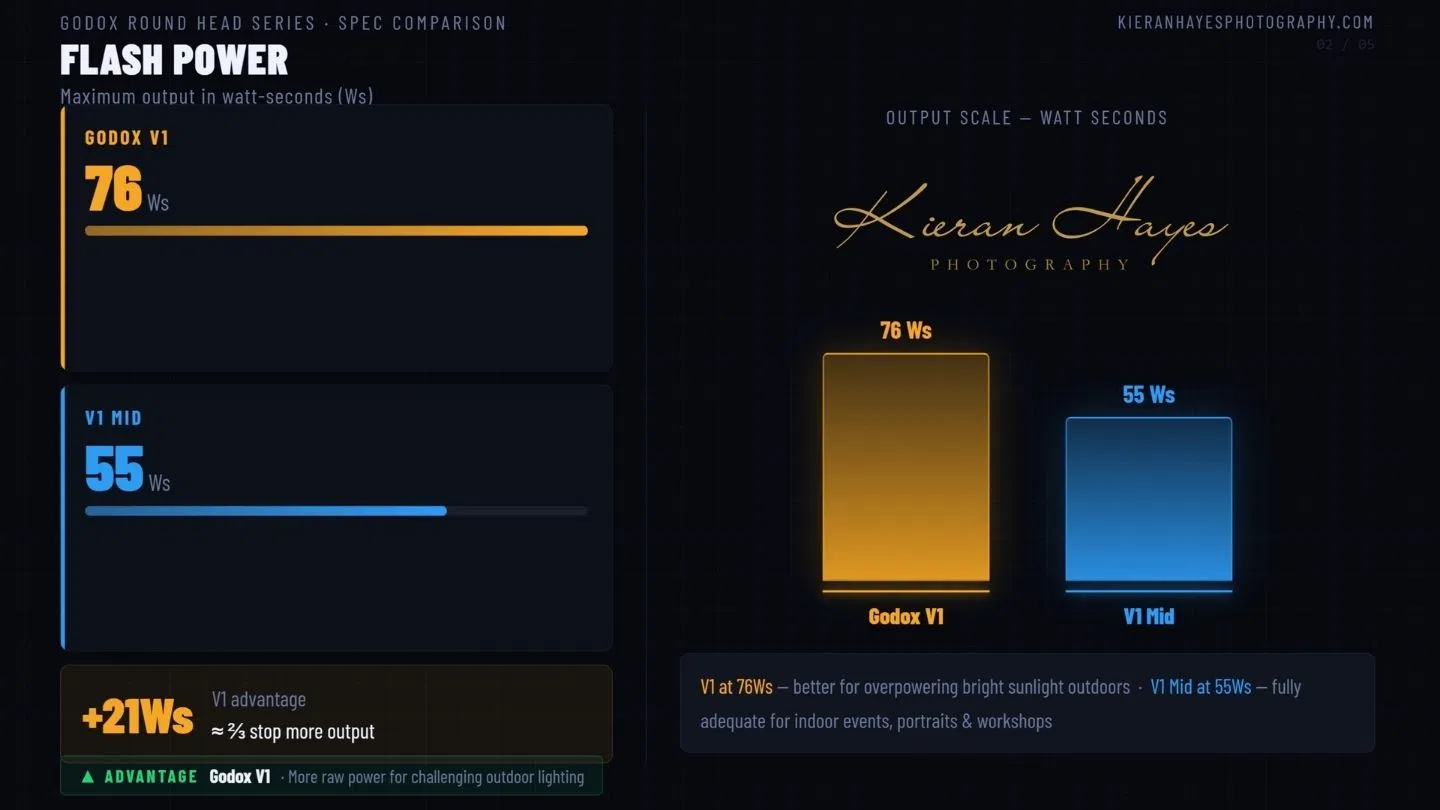
This is the main spec difference between these two flashes and it is worth being honest with yourself here and ask yourself do you need the power because if you do then the V1 Mid may not be the right unit for you.
The V1 Mid outputs 55 watt-seconds. The original V1 outputs 76 watt-seconds. That is approximately two-thirds of a stop less power.
For the majority of shooting situations — indoor events, wedding receptions, portrait sessions, workshops and bounce flash work — 55 watt-seconds is absolutely fine. In practice you will not notice the difference.
Where the gap becomes relevant is when shooting outdoors in strong direct sunlight and trying to overpower the ambient light. In the real world image below you can see this.
This shot was taken to give you an idea of how this unit works in real world conditions I fired off the shot at full power with the camera set to ISO 64, f/2.8 and 1/8,000s with HSS enabled. I was using an 85mm lens and a bit of a distance away and this has to be a worst case situation for this flash.
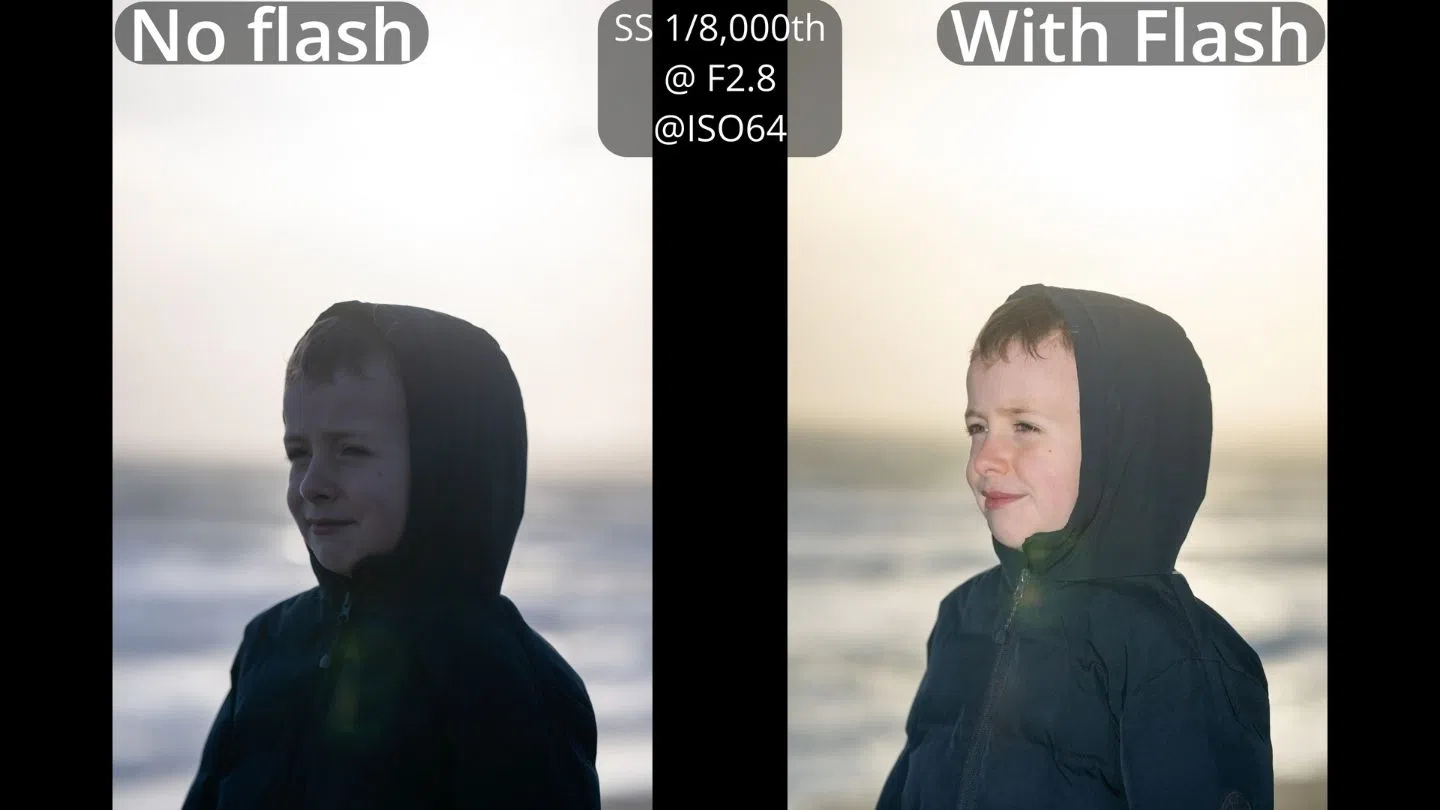
Even in these very bright conditions the V1 Mid still produced very usable results as you can see.
The original V1 has more headroom in those extreme situations though and this is where a bit of thought comes into it and if you find yourself looking for that extra kick, then the V1 might be the better option for you.
If you regularly need to overpower bright sunlight and maximum flash power is critical to your work, also consider the Godox V100 with its 100Ws output. For most photographers though, 55Ws covers everything you need.
Recycle Time and Battery Life
Recycle Time
The V1 recycles at full power in 1.5 seconds. The V1 Mid takes 1.7 seconds. That is a 0.2 second difference which in real-world shooting is barely noticeable. This is not a meaningful distinction between the two flashes for the vast majority of use cases. So again very little between them here.

Battery Life
This is where the V1 Mid pulls clearly ahead. The VB22 battery delivers over 650 full-power flashes per charge. The original V1 manages approximately 480.
That is 170 more shots per charge — a 35% improvement. Over a full wedding day, a long workshop or an extended outdoor session, that difference genuinely matters.
One important note on battery comparisons: because the V1 Mid outputs less power per flash, it draws less from the battery per shot. If you were to equalise the output power of both flashes the battery life figures would be closer than the headline numbers suggest. The V1 Mid’s advantage is real but the gap is partly a function of its lower output.

Flash Duration
Flash duration is often overlooked but it matters when freezing fast motion. Both flashes reach 1/20,000th of a second at minimum power — they are identical at that end of the range.
At full power the difference becomes clear. The V1 has a minimum flash duration of 1/300th of a second. The V1 Mid starts at 1/600th of a second — twice as fast.
This means the V1 Mid freezes motion more effectively at every power level. For fast-moving subjects in lower light this is a genuine advantage. Worth noting that reducing the output power on the original V1 will improve its flash duration figures, so the gap narrows as you pull back from full power.
Zoom Range
A detail that is easy to miss: the V1 Mid has a wider zoom range than the original V1. The V1 Mid covers 24–105mm. The original V1 starts at 28mm.
If you regularly shoot with a 24–70mm or 24–120mm lens this matters — a 24mm flash coverage start means no vignetting at the wide end.
The original V1 at 28mm can show vignetting on full-frame bodies when using wider focal lengths.

Wireless Performance
The V1 Mid is fully integrated into the Godox 2.4GHz X wireless system. It operates as both a master and a slave, making it compatible with the full range of Godox strobes, triggers and receivers including the XPro series triggers.
The Godox X system has proven itself to be extremely reliable over the years and that continues here. Off-camera triggering is fast and consistent, and the wireless range is more than adequate for most working scenarios.
TTL Performance
TTL auto flash performance on the Nikon Z system is solid. The flash communicates well with the camera, exposures are consistent and the system locks on quickly without hunting. The round head design produces a noticeably more pleasing light fall-off compared to traditional rectangular speedlights — something that is particularly visible in portrait work.
High Speed Sync
HSS up to 1/8,000s on the Z8 and Z6III works exactly as you would expect from a Godox strobe. In testing shooting directly into bright sunlight as I showed in the images futher up the page at f/2.8 the HSS held up reliably without any issues.

V1 Mid vs V1 — Full Feature Comparison
- 650+ full-power shots per charge vs approximately 480 on the V1
- Wider zoom range — 24mm start vs 28mm on the V1
- 2-inch OLED touchscreen vs LCD display
- USB-C direct battery charging — no separate dock needed
- Daylight-balanced 5300K modelling lamp vs 3200K on the V1
- 2× faster minimum flash duration at full power
- Lower price — $179 vs approximately $229 for the V1
- Higher output — 76Ws vs 55Ws (approximately ⅔ stop more power)
- Larger battery capacity — 2600mAh vs 2200mAh
Where the V1 Mid wins
Where the V1 wins
Review Conclusion
The Godox V1 Mid is a genuinely well-thought-out product. Godox have taken the core strengths of the V1 — the round head, the wireless system, the proven reliability — and delivered them in a lighter, more modern package with a better screen, USB-C charging and improved battery life, all at a lower price point.
The power reduction is the one real trade-off. 55 watt-seconds versus 76 is not nothing, and photographers who regularly need to overpower strong ambient light will feel that gap. For everyone else — indoor events, portrait work, weddings, workshops and general run-and-gun shooting — the V1 Mid does everything you need and does it very well.
A brilliant flash at a fair price, in a very practical and well-balanced form factor. For most Nikon Z photographers this is now my go-to speedlight recommendation at this price point.
The Godox V1 Mid is available now priced at $179 in versions for Nikon, Canon, Sony, Fujifilm and OM System.
ⓘ These are affiliate links — using them costs you nothing extra and helps support the free content on this site. The Essential Photo & Video discount code KIERANHAYESPHOTOGRAPHY gives you 10% off and is available on all Godox products.

Kieran Hayes
Kieran is a professional fashion and commercial photographer with over 15 years of experience and a long-standing passion for landscape photography. He works with photography gear in real-world, professional environments where reliability, performance, colour accuracy and durability matter most.
His reviews reflect the practical demands of both paid client work and the creative freedom of his own personal projects.