Nikon Z8 vs Z7II: Which One Is Right for You?
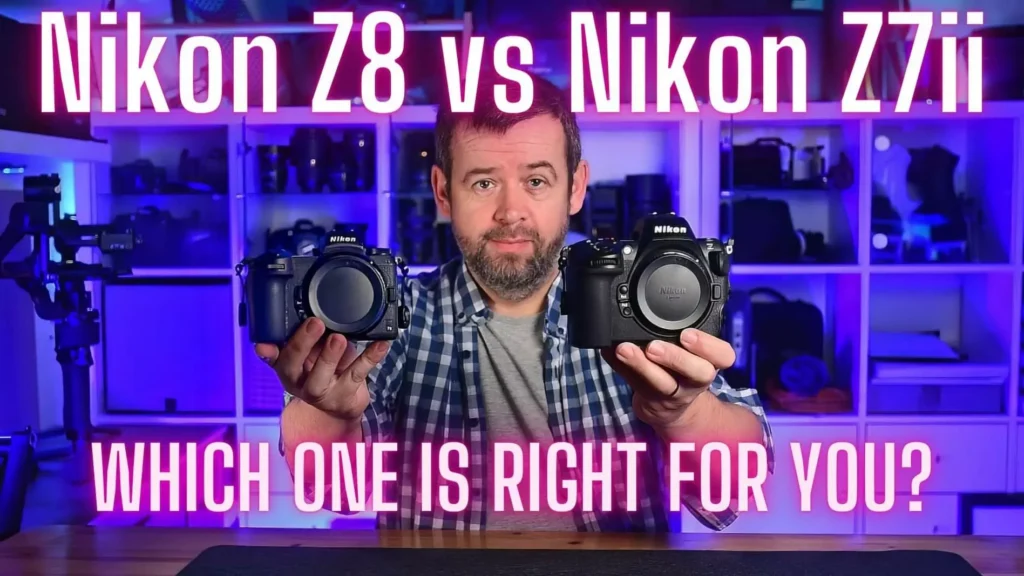
I have owned the Nikon Z7II since 2021 and the Z8 since May 2023, when I became one of the first people in Ireland to own one. Between them they have taken well over 200,000 photographs for me, from fashion shoots and weddings to seascapes on the West Cork coast. So this isn’t a spec sheet comparison. It is what I have learned from using both, day in and day out.
Should you buy the Z8 or the Z7II? It is one of the questions I get asked most, on YouTube, by email and on my workshops. Most people will tell you the Z8 is better, so buy the Z8. For a lot of photographers that is the right answer. For some, though, the Z7II is just as good, if not slightly better. It also costs a lot less.
I love my Z8 and I have had a mixed relationship with my Z7II over the years. Yet when I head out to shoot landscapes, the Z7II still goes in my bag every time, even over the Z8. Here is why. If you want the full story on either camera, see my Nikon Z8 review and Nikon Z7II review.
The Quick Verdict
| Category | Winner |
|---|---|
| Colour | Z8 |
| Dynamic range | Z7II |
| High ISO | Z7II |
| Size and weight | Tie |
| Battery life | Z7II |
| Autofocus | Z8 |
| Video | Z8 |
| Price | Z7II |
In short, the Z8 is the camera for fast-moving subjects and video, while the Z7II matches or slightly beats it for landscapes and still subjects at a much lower price.
Specs at a Glance
Here are the key differences on paper. The two cameras share the same 45.7MP resolution, but almost everything around the sensor is different.
| Specification | Nikon Z8 | Nikon Z7II |
|---|---|---|
| Sensor | 45.7MP stacked BSI CMOS | 45.7MP BSI CMOS |
| Processor | EXPEED 7 | Dual EXPEED 6 |
| Shutter | Electronic only, up to 1/32,000s | Mechanical and electronic, up to 1/8,000s |
| Fastest burst (RAW) | 20fps | 10fps |
| Video | 8K 60p, 4K 120p, internal RAW | 4K 60p |
| In-body stabilisation | Up to 6 stops | Up to 5 stops |
| Card slots | CFexpress Type B/XQD and SD UHS-II | CFexpress Type B/XQD and SD UHS-II |
| Rear screen | Two-way tilting | Tilting |
| Battery | EN-EL15c, approx. 330 shots (CIPA, viewfinder) | EN-EL15c, approx. 360 shots (CIPA, viewfinder) |
| Weight with battery and card | 910g | 705g |
| Size | 144 x 118.5 x 83mm | 134 x 100.5 x 69.5mm |
| Launch price | $3,999.95 | $2,999.95 |
| Today’s price (US, November 2026) | About $3,200 | About $1,700 |
Figures from Nikon’s official specifications. Today’s prices include current offers and change often, so check my Nikon deals page for the latest. Battery figures are Nikon’s CIPA ratings and real-world results will vary.
How I Actually Use Them
My Z8 is my everyday camera. It handles my commercial, fashion, portrait, wildlife and sport work. With over 100,000 images on it, it is the camera I reach for on paid jobs. I would buy it again tomorrow.
My Z7II is my landscape and travel camera, with over 100,000 shots of its own. Its only real weakness is autofocus. For landscapes, that simply doesn’t matter. What matters there is detail and dynamic range. That is exactly where it shines. I would still buy it today.
That split tells you most of what you need to know. If your subjects move, the Z8 earns its price. If they don’t, the Z7II gives you nearly everything for a lot less money.
Image Quality
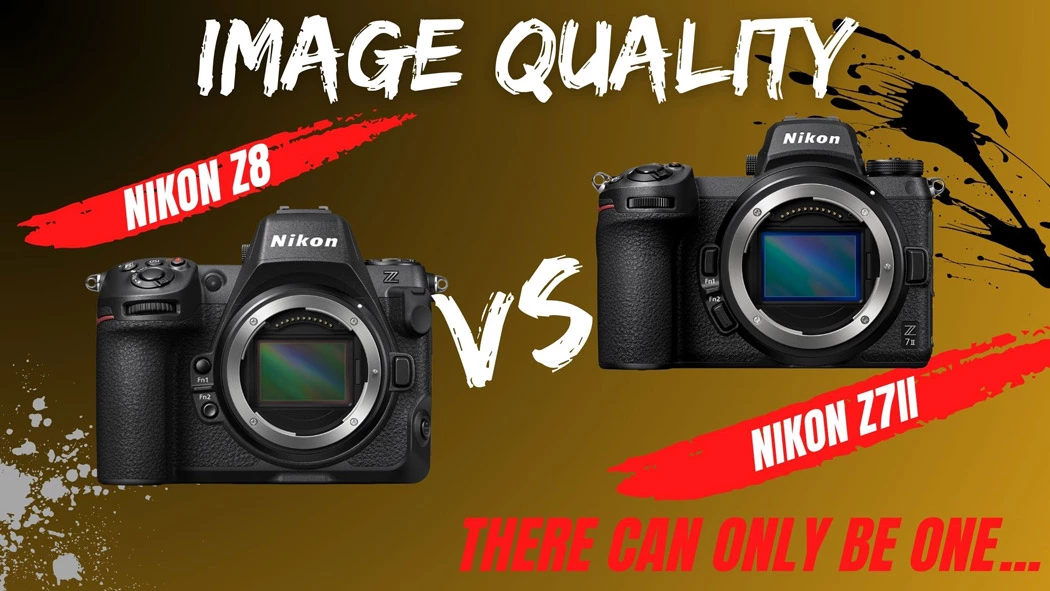
Before we get into the finer details, the most important point is that there is no difference in the sharpness you get from the Z8 and the Z7II. There are some very slight differences in overall image quality, though. They might help you decide. They might also surprise you.
Colour
This was the first thing I noticed when I moved from my Z7II to the Z8. The difference is very slight, but the colour from the Z8 is just that tiny bit nicer to my eye. I always found my Z7II had a very slight green tint in the shadows and highlights and only in certain shots.
That is me being hyper-critical, but I did notice it, especially when shooting with my Z6II and Z7II on the same day. The Z6II had slightly nicer colour and I find the Z8 is the same as the Z6II. So for colour straight out of the camera, the Z8 wins.
Winner: Z8
Dynamic Range
There is a slight difference in dynamic range too, but this time the Z7II comes out stronger, at 14.7EV against 14.2EV for the Z8. That might not sound like much and it isn’t, but it is noticeable on certain shots.
I am talking about photographs where you push the camera to its limits, such as landscapes or seascapes shot straight into a setting sun with a 3 or 4 stop graduated filter fitted and dark rocks in the foreground.
In post-processing, you might have to pull the highlights down, lift the exposure by a stop and open the shadows right up to get those dark foreground rocks to pop. That is where you will see the difference. It is very slight, but it is there.
Winner: Z7II
High ISO Results
Much like dynamic range, high ISO shots from the Z7II are ever so slightly better. If you shoot at high ISO and need to recover a bit of shadow detail, the Z7II is fractionally ahead.
Winner: Z7II
My full Nikon Z8 review covers my experience with the Z8 after more than a year of use, pros and cons included.
Size and Weight
The first thing you will physically notice is the difference in size and weight. The Z8 has a much nicer grip that honestly feels like a great DSLR such as the D850. The Z7II has a smaller grip and my hand just doesn’t fit around it properly.
One way around the smaller grip on the Z7II is an L bracket, which gives the camera that bit of extra height.
The weight of the Z8 helps balance the camera when you are using a heavier zoom or a telephoto prime and it just feels right in your hand. The Z7II feels a little light in comparison. It still works well and that is probably just a throwback to my DSLR days.
On the other hand, the Z7II is smaller and lighter, which makes it ideal for travel and gimbal work. That could be a big plus if you are a travel photographer.
Winner: a tie for me
Battery Life
Both cameras use the same EN-EL15c battery, which is handy if you own both. On paper there is little in it, with Nikon rating the Z8 at around 330 shots per charge and the Z7II at around 360.
In practice there isn’t a huge difference either. After a few outings, though, you will notice that the Z8 goes through batteries faster. Both cameras can be charged and powered over USB-C, so a power bank in your bag makes a good backup.
Winner: Z7II
Get the most from your Z8 or Z7II
My Pro Guide apps explain every button, menu and setting on your camera, with my recommended setups for every type of photography. They work fully offline, so they are always in your pocket when you need them.
Z8 Pro Guide appZ7II Pro Guide appAutofocus
This was only ever going one way. The Z8 is the clear winner with its faster processor and much improved subject tracking.
If you are a portrait, event, wildlife or sports photographer, you will benefit from the Z8. The Z7II is good but it is a step behind. You can still use the Z7II for all of those, but you may get a few more out-of-focus shots than you would with the Z8.
For landscapes, still life, macro and slower-moving or posed subjects, the Z7II works perfectly well.
Winner: Z8
Video Recording
If you also shoot video, the Z8 is again the clear winner. With 8K resolution, internal RAW recording, more codecs and faster autofocus, there is no contest.
If you shoot 4K with an Atomos Ninja or another external recorder, the Z7II does a good job, but the Z8 is clearly ahead.
Winner: Z8
Check out my Nikon Z8 video rig guide, where I walk you through three different rigs for the Z8 and how I use them, from just under $200 up to around $900.
The Z8 Has No Mechanical Shutter
The Z8 has no mechanical shutter at all. Its stacked sensor reads out so quickly that it doesn’t need one and for most shooting you will never notice the difference.
There is one thing worth knowing, though. Under some LED and fluorescent lighting you can get banding in your photos, which matters at indoor events, sports halls and weddings. The Z8’s high-frequency flicker reduction setting helps a lot, but it is something to keep an eye on.
The Z7II has a traditional mechanical shutter as well as an electronic one, so banding is only a concern if you choose its silent shutter.
There is a small bonus on the Z8 for landscape photographers. It has a sensor shield that closes when the camera is switched off, which helps keep dust off the sensor when you change lenses outdoors.
Did you know the Z8, Z7II and Z6II all have extended shutter speeds? They do and it is incredibly handy for long exposure photographs longer than 30 seconds. Enable the setting and you can shoot exposures of up to 15 minutes straight from the shutter speed dial. My extended shutter speeds guide shows how to set it up.
Price
An obvious one. When I first wrote this comparison the Z7II was roughly $1,600 cheaper than the Z8. In November 2026 the gap in the US is still around $1,500, with the Z8 at about $3,200 and the Z7II at about $1,700 with current offers. For that difference you could buy the 14-30mm f/4 or the 105mm f/2.8 Macro with the Z7II and still have change in your back pocket.
Prices change constantly and Nikon run offers from time to time, so check the current prices below or see my Nikon deals page, which I keep up to date.
Winner: Z7II
Nikon Z8 at AdoramaNikon Z8 on Amazon
Nikon Z7II at AdoramaNikon Z7II on Amazon
These are affiliate links, so if you buy through them I may earn a small commission at no extra cost to you. Thank you for supporting my website and channel.
Who Should Buy the Z8?
Videographers and hybrid shooters, along with portrait, sports, event and wildlife photographers, to name a few. Its fast, accurate autofocus will seriously help anyone photographing quick-moving subjects, as will its advanced video features and silent shooting.
Who Should Buy the Z7II?
Landscape, seascape, still life, macro, travel and posed portrait photographers. In fact, anyone who doesn’t need the Z8’s faster autofocus and video features. Some genres might even benefit slightly from the Z7II, although the difference is tiny and you would really have to pixel peep to see it.
If that is you, you may be better off saving your money and buying the Z7II. If you plan to move into any of the genres that would benefit from the Z8, think about how much difference it would really make for you and whether it fits your budget.
If you go for the Z8, my Nikon Z8 best settings guide covers the 15 settings I changed straight away that turned it into a beast of a camera. Not every setting will suit you, but most will.
I have worded this comparison carefully. The Z7II can of course handle events, sports and wildlife and I have used it for most of them myself. The Z8 just makes life easier in those genres. Check the full specs of both cameras before you decide, as there are plenty of technical differences and what is right for me could be wrong for you.
If you are torn between the Z8 and the Z6III instead, I have a full Nikon Z8 vs Z6III comparison too. For landscape work specifically, my guide to Nikon Z cameras for landscape photography compares the Z8, Z7II, Z6III, Zf and Z5II.
My Verdict
For my paid work, the Z8 is the camera I reach for, because it handles everything those jobs throw at it. But I would never tell a landscape photographer to spend the extra money on it. The Z7II is one of the most underrated cameras in Nikon’s range. At today’s prices, it is a real bargain.
Still torn because you want a bit of both? Look at a good used Z8. It gives you the best of both cameras in one body. It also saves you a good chunk on the price of a new one. Check the latest prices on my Nikon deals page.
Nikon Z8 vs Z7II FAQ
Is the Nikon Z8 better than the Z7II?
For autofocus, video and colour straight out of the camera, yes. For dynamic range, high ISO shadow recovery and price, the Z7II is slightly ahead. Sharpness is the same on both.
Is the Z7II good for landscape photography?
Very much so. Its dynamic range is slightly better than the Z8’s and it is smaller, lighter and a lot cheaper, which makes it a superb landscape camera.
Should I upgrade from the Z7II to the Z8?
Only if you need faster autofocus for moving subjects or the Z8’s video features. For landscapes and still subjects, the upgrade will make very little difference to your images.
See you out there,
Kieran.
Do the Z8 and Z7II use the same battery?
Yes. Both use the EN-EL15c, so you can share batteries between them. The Z8 goes through them a little faster.
Does the Nikon Z8 have a mechanical shutter?
No. The Z8 uses an electronic shutter only. It works well for almost everything, but you can see banding under some artificial lights. The Z7II has both a mechanical and an electronic shutter.
Is there a Nikon Z7III?
Not at the time of writing in November 2026. Nikon hasn’t announced a successor to the Z7II and I don’t base buying advice on rumours. If you need a high-resolution camera now, the Z7II and Z8 are both excellent choices.
- 13 November 2026: Moved to Kieran Hayes Photography from Landscape Photography Ireland, with a quick verdict table, a specs table, battery and shutter sections, how I use each camera, my verdict, an FAQ and updated links.
- 30 November 2023: First published on Landscape Photography Ireland.