Nikon Zf Review 2026: Stunning Design, But Is It Any Good?

Nikon Zf Review: Features, Performance and Real-World Use
Welcome to my in-depth Nikon Zf review. I’m Kieran Hayes, a professional photographer and videographer based in West Cork, Ireland, NPS (Nikon Professional Services) member and Nikon Z shooter since the early days of the system. I currently own the Nikon Z8, Z6III, Z7II and Z5II.
Nikon loaned me a Zf for two weeks at the end of October 2024 and since then I’ve worked with plenty of clients’ Zfs on my workshops. Its 24.5MP sensor is the same one I used for over three years in my Z6II and the same one inside my Z5II today and its EXPEED 7 processor is the one inside my Z8, Z6III and Z5II, so I know what’s going on inside this camera very well.
In this review I’ll share my honest, real-world experience with the Zf, covering autofocus, image quality, high ISO performance, size and weight, dynamic range, video capabilities and the positives and negatives of this gorgeous retro body.
By the end, you should know whether the Nikon Zf deserves a place in your camera bag.
Let’s start with one of the most important things about any camera: its price.
This review is part of my complete Nikon Z camera review guide, where you’ll find every camera body review, lens review, head-to-head comparison and accessories guide in one place.
Nikon Zf: The Quick Verdict
The bottom line: A genuinely modern camera dressed in a gorgeous retro body. Same EXPEED 7 autofocus as the Z8 and Z9, 8 stops of IBIS and 10-bit internal N-Log video, for well under the price of a Z6III. The only real weakness is the flat grip, which is solved with a cheap add-on. One of Nikon’s best cameras in 2026.
- Stunning retro FM2-inspired design with brass dials
- Same EXPEED 7 AF as the Z8 and Z9: exceptional
- 8 stops of IBIS (more than the Z8 or Z9)
- Excellent dynamic range (the same sensor as the Z6II)
- Fully articulating flip-out screen
- Dual base ISO and excellent low-light performance
- 10-bit internal H.265 N-Log video
- Pixel Shift up to 96MP
- Available in 7 colours
- Flat grip: struggles with heavier lenses (easily solved with a Neewer or SmallRig grip)
- No sensor shield when changing lenses
- 4K 60p is cropped and shows some rolling shutter
- Micro SD secondary card slot rather than full SD
My full Nikon Zf review video
Nikon Zf: Price & Value
Updated November 2026
One of the biggest changes since I first reviewed the Nikon Zf is the price. At launch in late 2023 the body-only was $1,999 / £2,299 / €2,299 . Even then I thought it represented excellent value.
As of November 2026, with the early Black Friday savings, the Zf has come down meaningfully across all markets:
At these prices the Zf is genuinely hard to ignore. Prices change quickly at this time of year, so I keep the latest Zf deals on my Nikon and photography deals page. You’re getting Nikon’s EXPEED 7 processor, 8 stops of IBIS (more than the Z8 or Z9), full-frame image quality and that stunning retro design for well under the price of a Z6III or Z8.
Nikon Zf Features
- A 24MP full-frame sensor, which has more than enough resolution for most photography genres and work.
- Great low-light performance, with an ISO range of 100–64,000 that extends down to ISO 50 and up to ISO 204,800.
- A simply gorgeous design. Just look at it: it’s a thing of beauty. Did you know Nikon hid a secret detail in this camera? More about that in a minute.
- Fully articulating 3.2” screen. I waited a long time for this in a serious hybrid camera from Nikon and I love it.
- 8 stops of VR built in. When you consider the Z8 and Z9 are rated at up to 6 stops (with a Synchro VR lens), that’s just wow.
- Excellent dynamic range, measured at 14.7 EV by DXOMARK.
- Crazy good autofocus, working down to -10EV.
- Eye detection AF for photos and videos of course.
- Subject detection for people, animals, birds, vehicles and planes.
- Pre-Release Capture at up to 30fps in JPEG.
- 30fps burst mode in JPEG and 14fps in RAW.
- Dual card slots: one SD and one Micro SD. Micro SD isn’t really an issue, as I’ll explain later.
- Pixel Shift technology for images up to 96MP.
- 10-bit internal H.265 N-Log video recording, which is just crazy at this price.
- Voice memo feature, which is handy for taking down names or notes for each photograph during events.
- Great skin tones and colouring out of the box as you would expect from a Nikon camera.
- Monochrome mode. Don’t dismiss it just yet, as it’s a nice feature to have.
As you can see, this camera is packed with useful features, which is why I was itching to use it when it arrived.
If you’re already thinking of buying one, check out my 7 best Nikon Zf accessories article here to get the most out of it.
And once it’s in your hands, these are the 15 Nikon Zf settings I changed straight away.
Camera Design
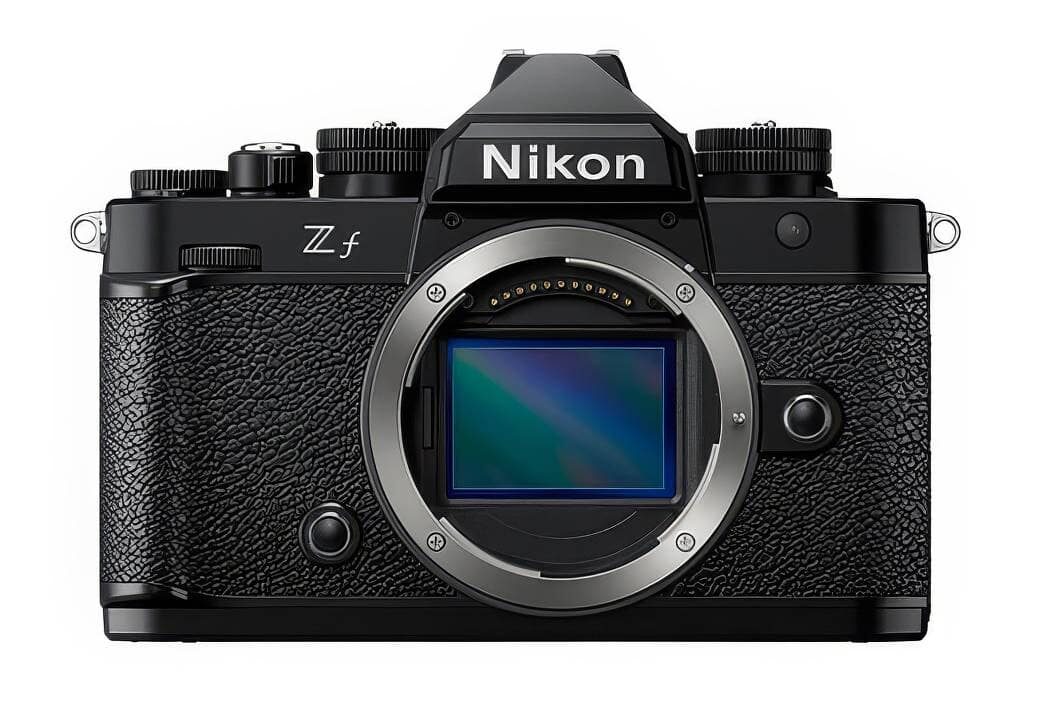
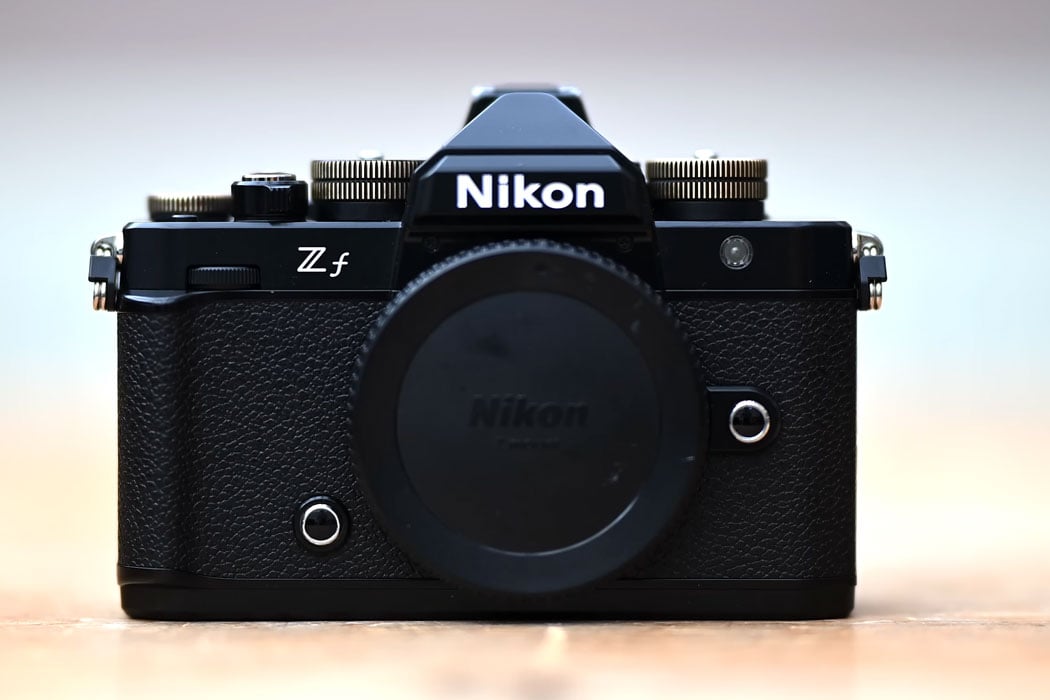
That’s a quick run-through of the main features. Before we get into the serious review, I want to talk about the camera body itself. Just look at this beautiful design. Doesn’t it take you back to the days when photography was so much simpler?
Those dials look gorgeous, but don’t be fooled by the looks. This camera is packed with features and, more importantly, it has the brains to back them up.
The Nikon Zf Secret
I mentioned earlier that this camera has a little secret: the Nikon Zf’s dials are made of brass. Part of the thinking is that, with years of wear, the black coating will slowly wear away and the brass will show through, giving you a beautiful patina.
This is something I wasn’t aware of until I watched Ricci’s video on the Nikon Zf a few months ago.
Ricci simulated what these controls would look like after some serious wear and tear by sanding them down. Yes, he actually sanded them down.
I highly recommend you check out his Nikon Zf video here and subscribe to his channel as he has loads of great Nikon content on there.
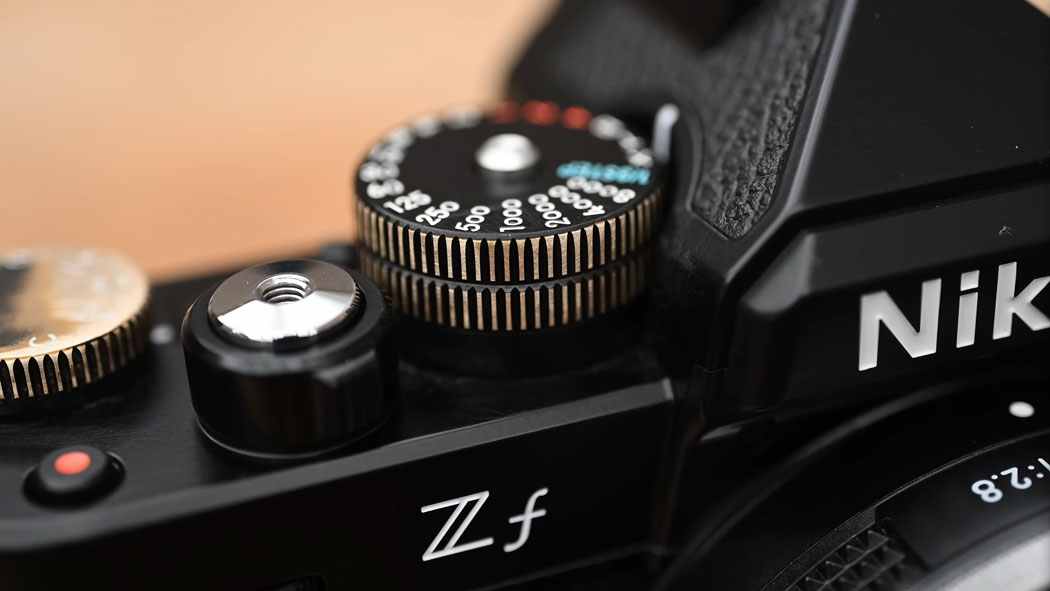

Just look at how nice that looks. You can see how this camera will age with you and develop its own character over time.
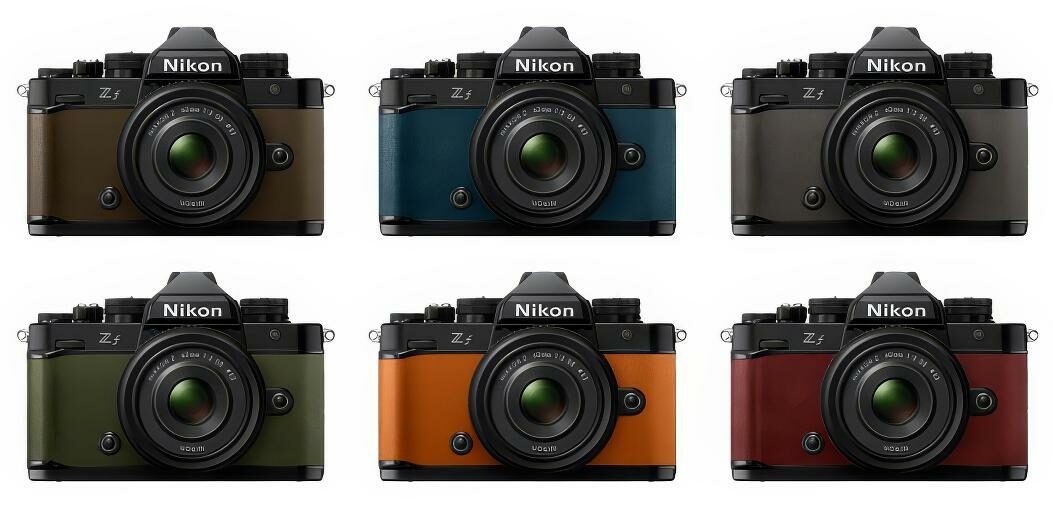
Speaking of style, you can get the Zf in a total of 7 different colours so you can match it even more to your character or style. Personally, I like the black version most as it stands out a little less, but that’s just me. What do you think? Have you got a preference?
Build Quality
On to build quality. The Nikon Zf just oozes quality in every aspect. The camera body feels strong and very solid: a welcome change in a world full of flimsy, plastic-feeling camera bodies.
If you travelled back in time to the 1980s this camera would fit right in. The only thing that would give you away is the large, crisp, bright 3.2” display on the back of the camera and the EVF too of course.
The controls, buttons, card slots, dials and switches are all as you would expect from Nikon, very well made and they feel very positive and robust.
The articulating screen doesn’t feel toyish and the overall finish to the camera body is top notch. I love using quality products and from the first moment I picked up the Nikon Zf, it inspired confidence.
So from a build quality perspective the Zf is top drawer. Nikon has built a thing of beauty here. The only point to note is that, as a solid camera, it’s not light, so let’s look at weight next.
Nikon Zf Weight
The Nikon Zf weighs 710 grams. That’s not heavy, but it’s not really light either. Anything built to this standard is going to weigh a bit more. The weight isn’t a deal-breaker in any way, but it’s worth knowing before you buy one.
Personally, I found the weight fairly normal and it compares well with my Z7II. I’ve always liked a slightly heavier camera to help balance my setup better when using longer or heavier lenses.
So it doesn’t feel like a little toy at the end of the 70-200 F2.8 S or Nikon Z 24-70 F2.8 S lens (review) for example. Heck I have even used the Zf with the Nikon Z 180-600mm lens (review) and while that’s a very large lens the camera still functioned perfectly with it.

Nikon Zf Performance
At the heart of the camera is the same 24MP sensor as the Nikon Z6II. It has proven itself to be a great sensor and I for one always liked the images it created for me in the years I owned it.
It also has the same shutter as the Z6II but that’s where the similarities between these two cameras end.
Speaking of the shutter, getting the same AF performance as my Nikon Z8 while keeping that solid mechanical shutter sound is a pure joy.
The Nikon Zf is an incredibly capable all round camera that excels at landscapes, still life, macro and portrait photography. Heck, it even does a really good job at wildlife and sports photography too.
The photograph above was captured during a street carnival in Ireland and I used the Nikon Z 50mm F1.2 (video review here) on the Zf to capture this image.
I shot it at f/1.2 to dissolve the background, with the camera on Auto ISO. It was very dark, I was three rows back in the crowd and holding the camera over my head, yet the Zf focused on the fast-moving street performers with ease. The results blew me away.
You can see more photographs in the video further up the page and I also talk you through them in a bit more detail.
Nikon Zf Dynamic Range
DXOMARK measures the Nikon Zf at 14.7 EV of dynamic range, which is excellent for high-contrast scenes. Like shooting portraits where the model is backlit by the sun or shooting landscapes in bright sunlight and your foreground is in the shade.
That range really helps when you need to recover shadow detail.
For comparison, DXOMARK measures the Nikon Z8 at 14.2 EV and the Z7II at 14.7 EV, so the Zf can keep up with the best of them. So if dynamic range was your concern you are in safe hands with the Nikon Zf.
ISO Performance
The Nikon Zf has a dual base ISO with its first base ISO being ISO 100 and its second being ISO 800 for photography. So in slightly darker scenes I go straight to ISO 800, even if ISO 400 would have worked.
High ISO performance is also really good. I have more photographs in the video further up the page where I run you through the results in a bit more detail.
I found it excellent up to ISO 3,200 and even 6,400. I should mention I’m very fussy about noise, as are my clients, so you may well be happy at ISO 12,800 and higher.
I also know photographers who say ISO 25,600 is very good. We all have different tolerances for noise.
Its two native ISO points for Video in N-Log are ISO 800 and ISO 6,400.
Autofocus
It has the same autofocus performance and modes as the Nikon Z8 and Z9, which makes it a great option in low light and fast-moving scenes. The subject detection modes do an amazing job. We all know how well the AF works on the Z8 and Z9 and the Zf is just the same.
On every shoot I used the Zf on, it locked on with little to no focus hunting. Eye AF also worked really well in all my tests, which is no surprise as it has the same EXPEED 7 processor as the Z8. It’s super quick and can handle nearly anything you throw at it. Trust me, I tried it in some very challenging situations.
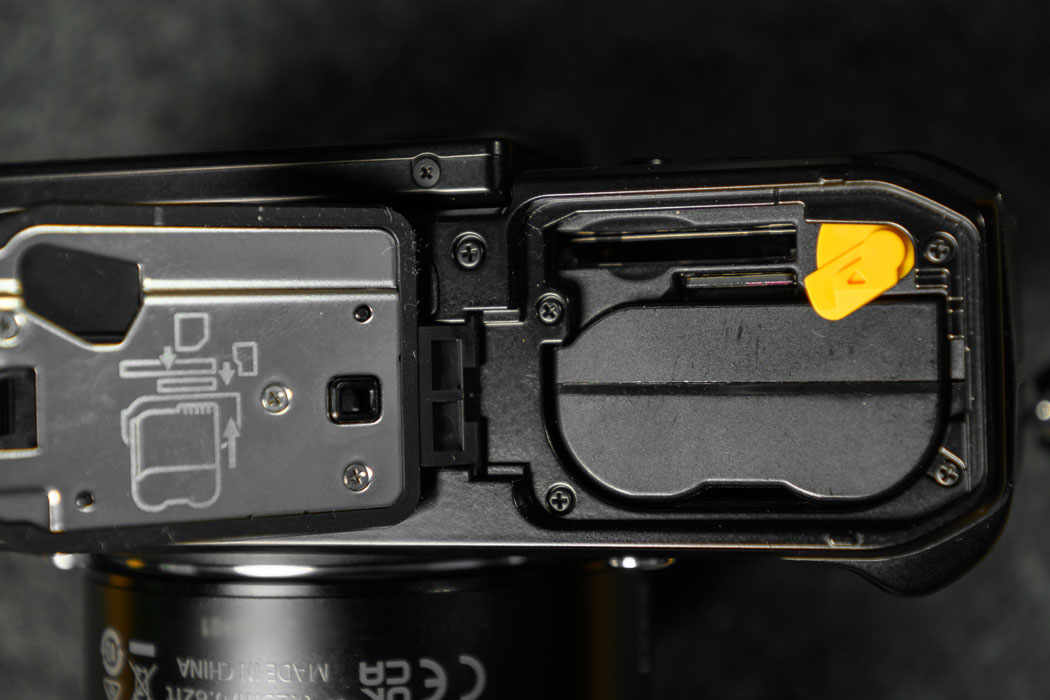
Nikon Zf Card Slots
The Zf has dual card slots but unusually Nikon have gone for one SD and one Micro SD slot. Now, if you’re thinking “oh no that’s a deal breaker as Micro SD is useless” then you can watch my video further up the page where I show you how well the Zf does in burst mode.
Burst mode test and details
I set the camera to Lossless RAW and set it to 14fps burst mode. I held the shutter down for just over 7 seconds until the buffer filled, so the camera recorded nearly 100 photographs before the slower card held it back.
It’s best to watch the video to see this in action. The camera then took about 20 seconds to clear the buffer and write all the images to the cards. I was using a fast 300MB/s SD card, so it was the Micro SD card that slowed things down.
I have to say the Micro SD card I used here was the 128GB SanDisk Pro which was a slight mistake. It writes at 90MB/s, whereas the 256GB and larger cards write at 140MB/s, around 50% faster.
I picked the SanDisk Extreme Pro card as I use them in my drone and other smaller vlogging cameras and have always found them to be extremely good and they are also very reasonably priced considering their high specs.
So you get 100 photos in 7 seconds, which is a serious number of images. If you need to sit on the shutter button for longer than that, you need a Z8 or, better still, a Z9. For the vast majority of people, Micro SD is more than good enough.
One little trick: leave the Micro SD card in the camera, as it’s a slight pain to take out. Once you’ve backed up the images from the SD card, just reformat the Micro SD card in the camera.
I presume Nikon chose Micro SD due to the limited space available, but as you can see it still does a really good job.
If you’d like to learn more about photography, why not join me on a photography workshop in Ireland? You’ll find details on my photography workshops for Nikon shooters.

VR and how good is it?
The in camera body image stabilisation in the Zf is really good. I do mean really good. In fact it’s better than the Z8 and Z9, which are rated at up to 6 stops (with a Synchro VR lens), whereas the Nikon Zf has 8 stops built in.
That’s a huge difference. Silly as it sounds, I didn’t realise it was better than my Z8 until I’d been using it for a few hours. At first I thought it just seemed to work better because it was lighter.
Then I read the specs and knew exactly why. In practice, I could handhold half-second exposures at 14mm and get very good results, which is completely nuts.
Pixel Shift Technology
Pixel Shift lets you capture very high resolution files of up to 96MP from this compact body. You need a still subject and a tripod, of course. For 96MP files the camera shoots a 32-image burst. Once the frames are combined in Nikon’s NX Studio software, the results are staggering.
There’s also a Monochrome mode with three profiles to choose from: Monochrome, Flat Monochrome and Deep Tone Monochrome.
I haven’t used it a lot, but if you shoot a lot of black and white this could be a serious feature for you. The results are very impressive and having it on its own switch is a nice touch.
Nikon Zf Videography
For video shooters, the Zf records 10-bit H.265 N-Log internally. That’s a big advantage over the Z6II or Z7II, which need an external recorder for 10-bit N-Log.
There’s the flip-out selfie screen for vloggers. 4K is recorded at up to 30p from the full width of the sensor (oversampled from 6K), or at 60p with a DX (1.5×) crop.
One point to note: there’s some rolling shutter at 4K 60p in fast-moving scenes. It improves at 4K 30p and is gone at Full HD. The Zf’s sensor isn’t as fast as the stacked sensors in the Z8 and Z9, which is why you see that effect.
Nikon Zf vs Z5II vs Z6III vs Z6II
These are the cameras most people weigh the Zf against. I own the Z5II and Z6III and shot with the Z6II for years, so here’s how they line up on the specs that matter.
| Zf | Z5II | Z6III | Z6II | |
|---|---|---|---|---|
| Body style | Retro, FM2-inspired dials | Classic Z body | Classic Z body | Classic Z body |
| Sensor | 24.5MP BSI | 24.5MP BSI | 24.5MP partially stacked | 24.5MP BSI |
| Processor | EXPEED 7 | EXPEED 7 | EXPEED 7 | Dual EXPEED 6 |
| Stabilisation | 8 stops | 7.5 stops | 8 stops | 5 stops |
| Top video | 4K60 10-bit | 4K60 | 6K60p N-RAW | 4K60 |
| Card slots | SD + microSD | 2× SD UHS-II | CFexpress B + SD | CFexpress B + SD |
| Weight | 710g | 700g | 760g | 705g |
| Best for | Style, travel and street | Best-value full frame | Hybrid shooters | A bargain on the used market |
Zf or Z5II?
Both give you a 24MP full-frame sensor with EXPEED 7 autofocus. If you love the retro dials and the way the Zf makes you slow down, it’s the one. If you want a proper grip and two full-size SD slots for less money, the Z5II makes more sense.
Zf or Z6III?
If video or fast action matters, the Z6III is the better tool, with its faster sensor, 6K RAW video and a grip built for long days. The Zf is for photographers who value the shooting experience as much as the specs.
Buying the Zf mainly for landscapes? I’ve written a separate guide to the best Nikon Z cameras for landscape photography over on my Landscape Photography Ireland site. It covers which body suits which kind of landscape work, from long hikes to big prints.
Best Lenses for the Nikon Zf
The Zf suits smaller primes best, but these are the Z lenses I’ve reviewed that pair well with it.
Nikon Zf Review: Final Thoughts and Would I Buy One in 2026?
The things I love about the Zf have to be its size, awesome autofocus, amazing build quality, finally a flip-out screen for us vloggers, the high ISO performance and the quality of the video this camera produces. In short there is an awful lot to love about the Nikon Zf but for me these are the highlights.
There are also a few things I don’t like about it and the first one has to be the grip. It’s just not there and I found it very difficult to hold it with heavier lenses attached.
The solution is simple, though: you can buy this Neewer Grip or you can also get the SmallRig version. Personally, I went for the Neewer one: it was cheaper, it has a vertical mounting point (which the SmallRig doesn’t) and it came with the brass button attachment. So that’s not a serious disadvantage for the Zf and easily solved.
The second is the lack of a sensor shield. I would have loved one to cover the sensor while we’re out and about changing lenses. I can’t understand why every mirrorless body doesn’t have one now, though I know it’s easier to fit one in the Z8 as it has no mechanical shutter.
The one massive problem I have with the Nikon Zf, though, is that I really want one now. I would use this camera for travelling around with and just being out and about with my family as well as being a back up camera for my Z7II or Z8.
In short, I hate you, Nikon. You need to stop producing amazing cameras. It’s becoming ridiculous: every model is just so stupidly good.
More Nikon Z Reviews & Guides
This Zf review is part of my complete Nikon Z camera guide: every body, lens and accessory reviewed from real professional use.
See you out there,
Kieran
- 16 November 2026: Fresh-eyes update. Added the 4K 60p crop and full-width 4K 30p details, corrected the dynamic range figures (now DXOMARK’s measurements), added details of my review video and tidied the wording throughout.
- 12 November 2026: Updated the price section with current UK, Irish and US prices.
- 10 November 2026: Added how I’ve tested the Zf, including the Nikon loan, a comparison with the Z5II, Z6III and Z6II and the best lenses.
- 18 November 2024: Review first published after two weeks with a Zf loaned by Nikon.
Nikon Zf

My honest Nikon Zf review: retro design, Z8-level autofocus and 8 stops of stabilisation, plus the flaws and how it compares with the Z5II and Z6III.
Product Brand: Nikon
4.8
Pros
- Stunning retro FM2-inspired design with brass dials
- Same EXPEED 7 AF as the Z8 and Z9 — exceptional
- 8 stops of IBIS (more than the Z8 or Z9)
- Excellent dynamic range (the same sensor as the Z6II)
- Fully articulating flip-out screen
- Dual base ISO — excellent low-light performance
- 10-bit internal H.265 N-Log video
- Pixel Shift up to 96MP
- Available in 7 colours
Cons
- Flat grip — struggles with heavier lenses (easily solved with a Neewer or SmallRig grip)
- No sensor shield when changing lenses
- Some rolling shutter at 4K 60p
- Micro SD secondary card slot rather than full SD